
Original article by Simone Smith, The Weekly Times
AUSTRALIA’S peak cattle lobby group has encouraged all beef producers to consider the use of a pain relief product recently approved for dehorning and disbudding.
Cattle Council of Australia president Howard Smith said the gel called Tri-Solfen, available from rural resellers and previously used for castration as well as mulesing, was something “the industry had been looking for a long time”.
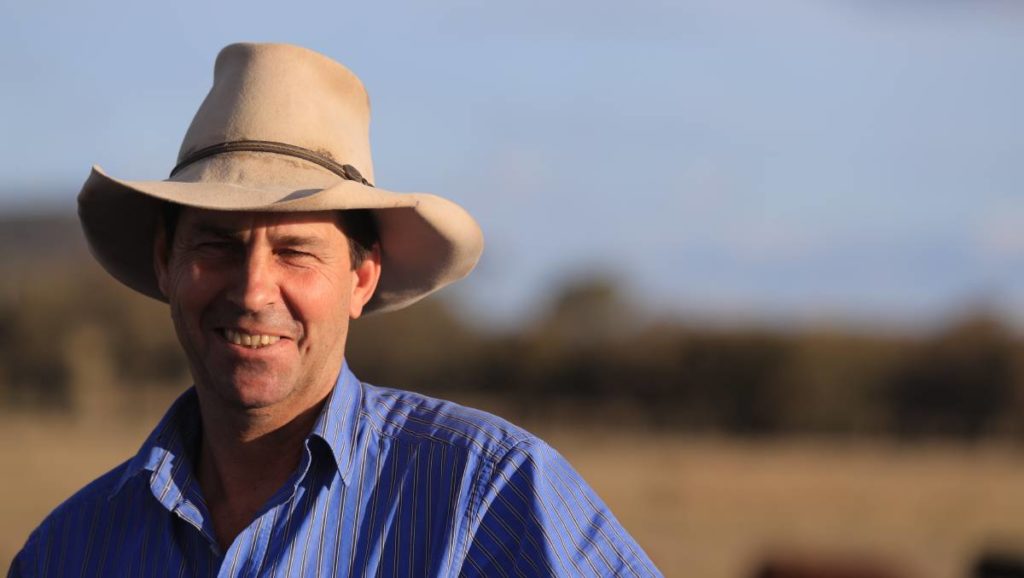
Photograph: Cattle Council of Australia president Howard Smith
“We need to keep lifting our industry standards because of what the public is demanding and what is acceptable now,” he said. “This is an opportunity, a product that can really help.”
Mr Smith had already used it for dehorning and disbudding, and was positive about the benefits of the product, which also included a wound healing formulation, short and long-term analgesia, and antiseptics, while reducing blood loss and coating the wound.
“There’s less bleeding. It acts like a clotting agent,” he said. “The animals aren’t stressed and mother-up well, it’s noticeable, the benefits.”
Meat and Livestock Australia said the cost was $1-$1.50 to treat each animal, with it best suited for calves six to eight weeks old. Mr Smith said the cost was irrelevant, with benefits outweighing the outlay.
University of Melbourne, Melbourne Veterinary School senior lecturer in cattle David Beggs said the extension of Tri-Solfen use meant beef producers could more easily use pain relief for dehorning and disbudding.
“It is too soon to tell (what the approval of Tri-Solfen for dehorning means), but with other pain relief products there’s been lots of research that shows good long-term pain relief. After a painful procedure the cattle eat better in the days following,” he said.
“So there’s a benefit there with welfare and productivity.”
Dr Beggs said the previous “gold standard” for dehorning or disbudding included administering local anaesthetic and other pain relief, but the local anaesthetic “doesn’t do anything for the throbbing pain after” and it required a vet for administration.
Until the approval of Tri-Solfen for dehorning, there were two other pain management products, which provided relief for up two-to-three days.
Herefords Australia general manager Andrew Donoghue said he had not spoken to members about using Tri-Solfen since it was approved last month for dehorning pain relief, but said animal welfare was important for producers.
“I’m pretty sure our members would take it on,” he said.
“Anything to help calves get through the dehorning process.”
The Australian dairy industry has an industry framework to encourage disbudding of calves at six to eight weeks, rather than dehorning. It comes under the Australian Animal Welfare Guidelines.
The industry has no legislation on dehorning, but some milk processors require suppliers to administer “appropriate pain relief” when dehorning or disbudding.
The RSPCA also welcomed the move.
Tri-Solfen® by Medical Ethics
Tri-Solfen® is a local anaesthetic and antiseptic gel spray that adheres well to wounds and acts as a barrier to environmental stimuli, promotes haemostasis and improves wound healing. Tri-Solfen® contains two proven topical local anaesthetics; fast-acting Lignocaine for immediate pain relief and long-acting Bupivacaine for prolonged post-operative pain relief. Adrenaline is included for its ability to reduce the shock and stress of blood loss, whilst prolonging the anaesthetic action. Tri-Solfen® also contains Cetrimide; antiseptic widely used to cleanse skin and wounds and provides protection from bacterial contamination.
Read scientific publications about Medical Ethics' Tri-Solfen
Learn more about Medical Ethics' Tri-Solfen